How to Build a Digital Marketing Strategy That Drives Real Business Growth
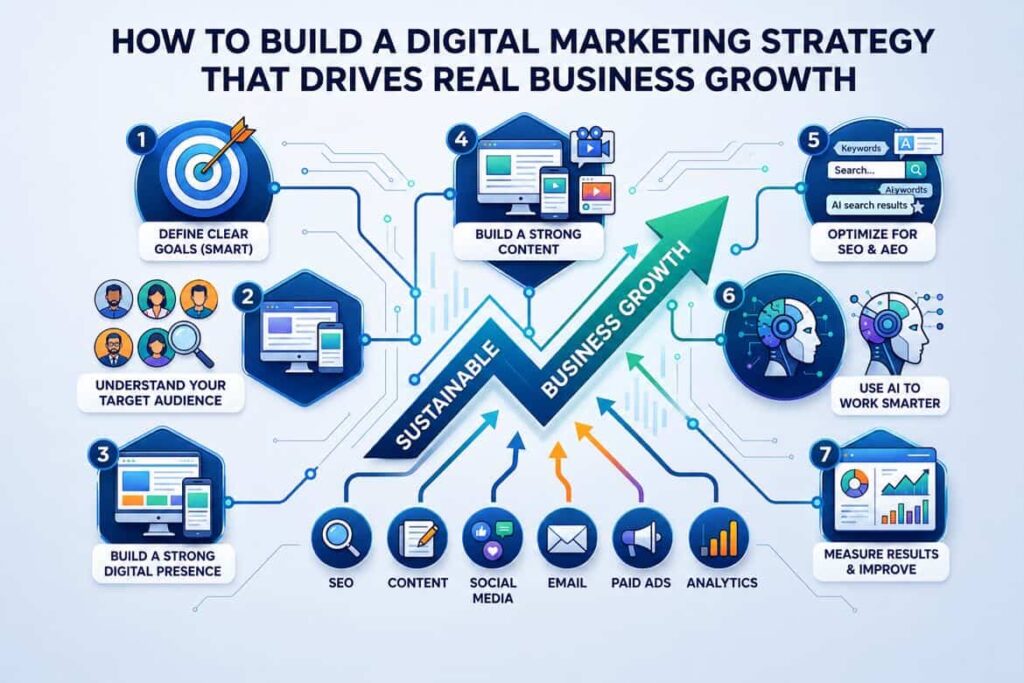
In today’s fast-changing digital world, having a website or social media presence alone is not enough. Businesses that achieve long-term success don’t depend on random marketing efforts—they build a clear, data-driven digital marketing strategy. A well-planned strategy helps businesses reach the right audience, strengthen their online presence, generate quality leads, and turn potential customers into loyal clients. What Is a Digital Marketing Strategy? A digital marketing strategy is a structured plan that explains how a business will use online platforms and digital channels to achieve specific goals. Instead of treating SEO, social media, content, and advertising as separate activities, a strong strategy connects every marketing effort to create a consistent customer journey. A complete digital marketing strategy may include: When these elements work together, businesses can improve visibility, build trust, and achieve better results. Step 1: Define Clear Business Goals Every successful strategy starts with knowing what you want to achieve. Your goals may include: Using SMART goals—Specific, Measurable, Achievable, Relevant, and Time-bound—helps you track progress and measure success effectively. Step 2: Understand Your Target Audience Successful marketing begins with understanding your customers. Before creating campaigns, identify: When you understand your audience, you can create content and campaigns that truly connect with them. Step 3: Build a Strong Digital Presence Your website is often the first interaction customers have with your brand. A successful website should be: Your website, social media platforms, and brand identity should work together to create trust and credibility. Step 4: Create Valuable Content Content is at the heart of digital marketing. Modern customers don’t just want advertisements—they want information, solutions, and value. Effective content includes: Consistent, valuable content helps businesses establish authority and build stronger relationships with their audience. Step 5: Optimize for SEO and AEO Search behavior is changing. Search Engine Optimization (SEO) helps your website appear in traditional search results, while Answer Engine Optimization (AEO) helps your content become more visible in AI-powered search experiences and voice searches. To improve your visibility: Businesses that prepare for both SEO and AEO will have a stronger advantage in the future of search. Step 6: Use AI to Work Smarter Artificial Intelligence is transforming digital marketing. AI tools can support businesses by helping with: However, successful marketing still requires human creativity, strategy, and understanding of customer needs. Step 7: Measure Results and Improve Continuously A digital marketing strategy should evolve based on performance data. Track important metrics such as: Analyzing data helps businesses understand what works and make smarter decisions. Common Digital Marketing Mistakes to Avoid Many businesses struggle online because they: Avoiding these mistakes can improve your marketing effectiveness and overall growth. Final Thoughts Digital marketing success is not about being present on every platform or following every trend. It is about having a clear strategy, understanding your audience, creating valuable content, and making decisions based on data.