Author name: rahnakumbidi@gmail.com

Digital Marketing Strategy

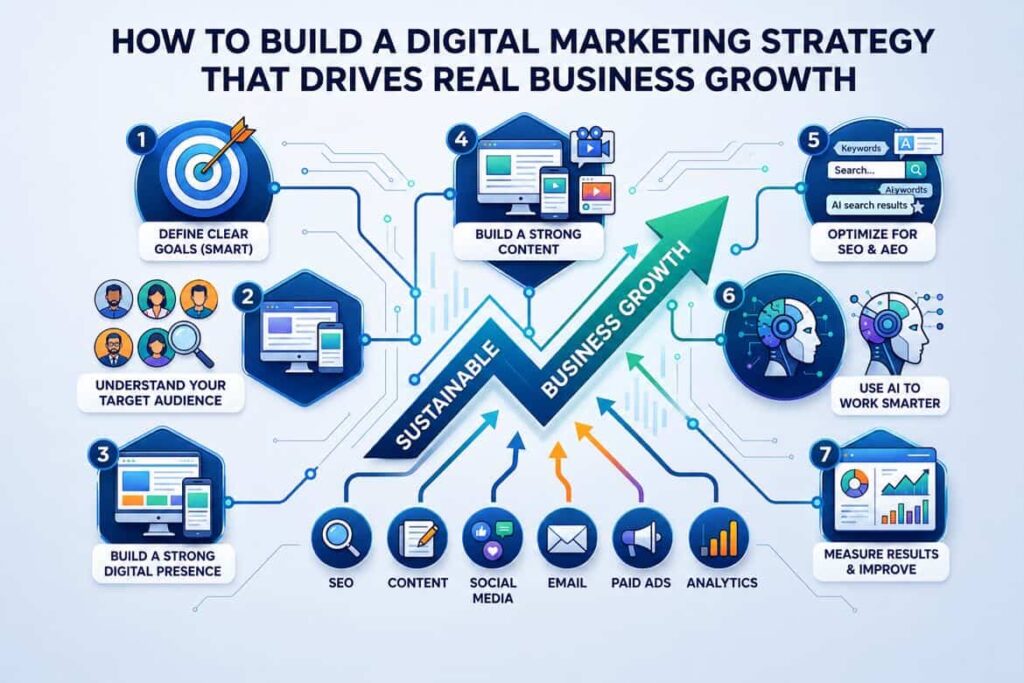
How to Build a Digital Marketing Strategy That Drives Real Business Growth

In today’s fast-changing digital world, having a website or social media presence alone is not enough. Businesses that achieve long-term success don’t depend on random marketing efforts—they build a clear, data-driven digital marketing strategy. A well-planned strategy helps businesses reach the right audience, strengthen their online presence, generate quality leads, and turn potential customers into loyal clients. What Is a Digital Marketing Strategy? A digital marketing strategy is a structured plan that explains how a business will use online platforms and digital channels to achieve specific goals. Instead of treating SEO, social media, content, and advertising as separate activities, a strong strategy connects every marketing effort to create a consistent customer journey. A complete digital marketing strategy may include: When these elements work together, businesses can improve visibility, build trust, and achieve better results. Step 1: Define Clear Business Goals Every successful strategy starts with knowing what you want to achieve. Your goals may include: Using SMART goals—Specific, Measurable, Achievable, Relevant, and Time-bound—helps you track progress and measure success effectively. Step 2: Understand Your Target Audience Successful marketing begins with understanding your customers. Before creating campaigns, identify: When you understand your audience, you can create content and campaigns that truly connect with them. Step 3: Build a Strong Digital Presence Your website is often the first interaction customers have with your brand. A successful website should be: Your website, social media platforms, and brand identity should work together to create trust and credibility. Step 4: Create Valuable Content Content is at the heart of digital marketing. Modern customers don’t just want advertisements—they want information, solutions, and value. Effective content includes: Consistent, valuable content helps businesses establish authority and build stronger relationships with their audience. Step 5: Optimize for SEO and AEO Search behavior is changing. Search Engine Optimization (SEO) helps your website appear in traditional search results, while Answer Engine Optimization (AEO) helps your content become more visible in AI-powered search experiences and voice searches. To improve your visibility: Businesses that prepare for both SEO and AEO will have a stronger advantage in the future of search. Step 6: Use AI to Work Smarter Artificial Intelligence is transforming digital marketing. AI tools can support businesses by helping with: However, successful marketing still requires human creativity, strategy, and understanding of customer needs. Step 7: Measure Results and Improve Continuously A digital marketing strategy should evolve based on performance data. Track important metrics such as: Analyzing data helps businesses understand what works and make smarter decisions. Common Digital Marketing Mistakes to Avoid Many businesses struggle online because they: Avoiding these mistakes can improve your marketing effectiveness and overall growth. Final Thoughts Digital marketing success is not about being present on every platform or following every trend. It is about having a clear strategy, understanding your audience, creating valuable content, and making decisions based on data.
AI Tech Trends⁠

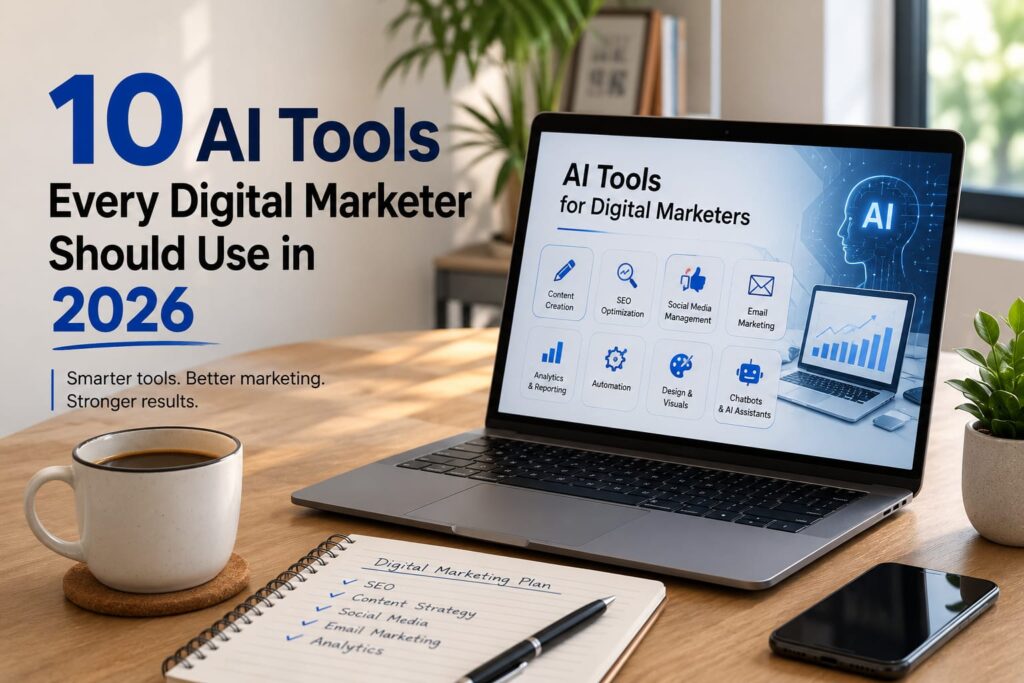
The Digital Marketer’s AI Toolkit: Must-Have Tools for Smarter Marketing in 2026

Artificial Intelligence is no longer just a future concept — it has become an essential part of modern digital marketing. In 2026, successful digital marketers are not replacing creativity with AI; they are combining human strategy with intelligent technology to create better campaigns, stronger brands, and smarter growth. From content creation and SEO to customer insights and automation, AI tools are helping marketers save time, make better decisions, and deliver more personalized experiences. Why AI Matters in Digital Marketing The digital landscape is changing faster than ever. Customers expect personalized content, quick responses, and meaningful brand experiences. AI helps digital marketers: The future of digital marketing belongs to professionals who know how to use AI strategically. 10 AI Tools Every Digital Marketer Should Know in 2026 AI assistants like ChatGPT help marketers with brainstorming ideas, creating content outlines, writing drafts, researching topics, and improving communication. From blog ideas to marketing strategies, AI can support marketers throughout the creative process. Visual content plays a major role in digital marketing. Canva’s AI features help create social media designs, presentations, marketing graphics, and brand visuals faster. It allows marketers to turn ideas into professional designs without spending hours on every project. AI tools like Google Gemini help marketers analyze information, generate ideas, and improve productivity. It can support research, planning, and content development workflows. SEO is becoming more competitive every year. AI SEO tools help marketers analyze keywords, optimize content, and create search-friendly strategies. With the rise of Answer Engine Optimization (AEO), understanding how people search and interact with AI platforms is becoming essential. Jasper helps businesses create marketing content, brand messaging, and campaign ideas while maintaining a consistent tone. It can be useful for teams managing multiple content projects. Research is an important part of digital marketing. AI-powered research tools help marketers quickly gather information, explore topics, and understand market trends. Marketing success depends on understanding customers. AI-powered CRM platforms help businesses manage leads, personalize communication, and improve customer relationships. Clear communication builds trust. AI writing assistants help marketers improve grammar, tone, readability, and professionalism across emails, blogs, and social media posts. Visual storytelling is becoming more important in branding. AI image tools help marketers create unique creative concepts, campaign visuals, and design inspiration. Automation allows marketers to focus on strategy instead of repetitive tasks. AI automation tools help connect different platforms and streamline workflows. The Future Digital Marketer: Human Creativity + AI Technology AI tools are powerful, but strategy, creativity, and understanding people remain the foundation of great marketing. The best digital marketers in 2026 will not simply use AI tools — they will know how to use them with purpose. AI can generate ideas, analyze data, and improve efficiency. But human creativity creates connection, builds trust, and turns brands into meaningful experiences. Final Thoughts AI is transforming digital marketing, and adapting to these changes is no longer optional. Whether you are a freelancer, business owner, or marketing professional, learning how to use AI effectively can help you create smarter strategies and achieve better growth. The future of digital marketing is not about AI replacing marketers. It is about marketers who know how to work with AI creating the future. ⸻

SEO Trends⁠.

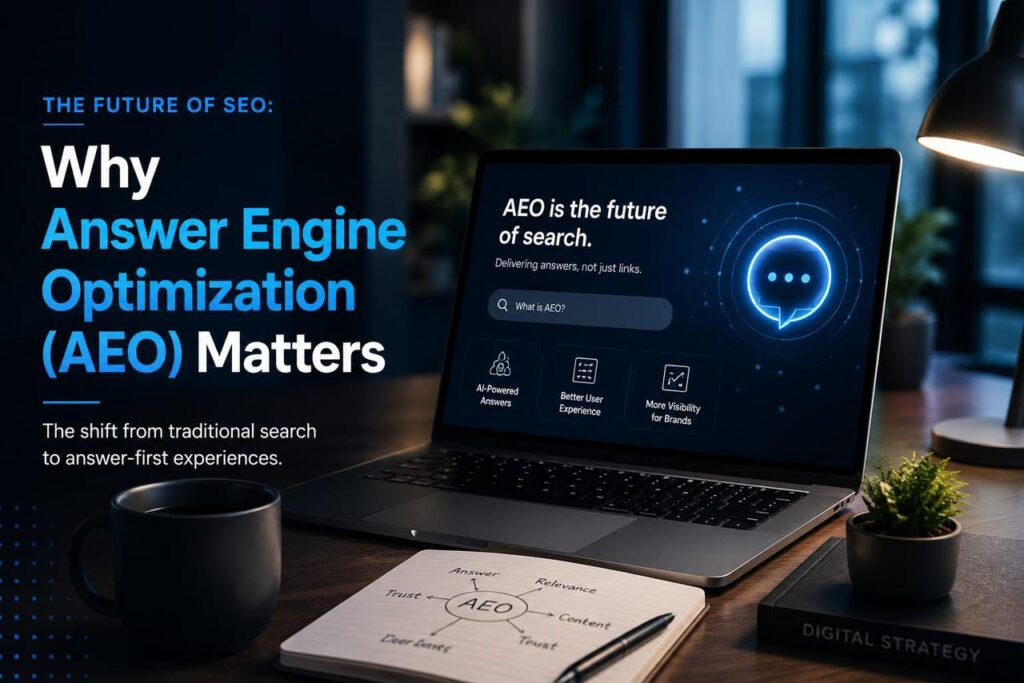
The Future of SEO: Why Answer Engine Optimization (AEO) Matters..

The way people search for information is changing rapidly. Search engines are no longer just providing a list of links—they’re delivering direct, conversational answers powered by artificial intelligence. As AI-driven search experiences become more common, businesses need to adapt. This is where Answer Engine Optimization (AEO) comes in. While Search Engine Optimization (SEO) remains essential, AEO is becoming the next evolution of digital visibility. Businesses that understand both will be better positioned to reach their audience in the years ahead. What Is Answer Engine Optimization (AEO)? Answer Engine Optimization (AEO) is the process of creating content that helps AI-powered search engines and virtual assistants provide accurate, direct answers to users’ questions. Instead of simply ranking on a search results page, AEO focuses on becoming the trusted source that AI platforms use when generating responses. Examples include: The goal is simple: make your content easy for both people and AI systems to understand. SEO vs. AEO: What’s the Difference? Traditional SEO focuses on improving your website’s visibility in search engine results through keywords, backlinks, technical optimization, and user experience. AEO builds on that foundation by optimizing content to answer specific questions clearly and naturally. Think of it this way: The future of digital marketing requires both. Why AEO Matters More Than Ever People increasingly ask questions in natural language instead of typing short keywords. AI-powered search tools understand context and provide complete answers, making high-quality, well-structured content more valuable than ever. More users rely on voice assistants to find local businesses, products, and services. Content that answers common questions clearly has a better chance of being surfaced. Modern audiences want fast, accurate information. Businesses that provide concise, trustworthy answers improve both user experience and online visibility. AI systems are more likely to highlight content that demonstrates expertise, authority, and credibility. Publishing helpful, reliable content strengthens your brand over time. How to Optimize Your Content for AEO If you want your content to perform well in both traditional and AI-powered search, consider these best practices: The Role of AI in Content Creation AI tools can help with research, brainstorming, and drafting, but they shouldn’t replace human expertise. The most effective content combines AI efficiency with real-world experience, creativity, and strategic thinking. Businesses that balance both are more likely to earn trust from users and search platforms alike. Looking Ahead SEO isn’t disappearing—it’s evolving. As AI reshapes the way people search for information, businesses need to move beyond ranking for keywords and start creating content that genuinely answers users’ questions. The future belongs to brands that educate, solve problems, and provide value at every stage of the customer journey. Final Thoughts Answer Engine Optimization is not a replacement for SEO—it’s the next step in its evolution. By combining strong SEO fundamentals with clear, helpful, and user-focused content, businesses can improve their visibility across both traditional search engines and AI-powered answer platforms. The future of search isn’t just about being found. It’s about being the answer.

Marketing Insights

Why Every Small Business Needs a Digital Marketing Strategy..

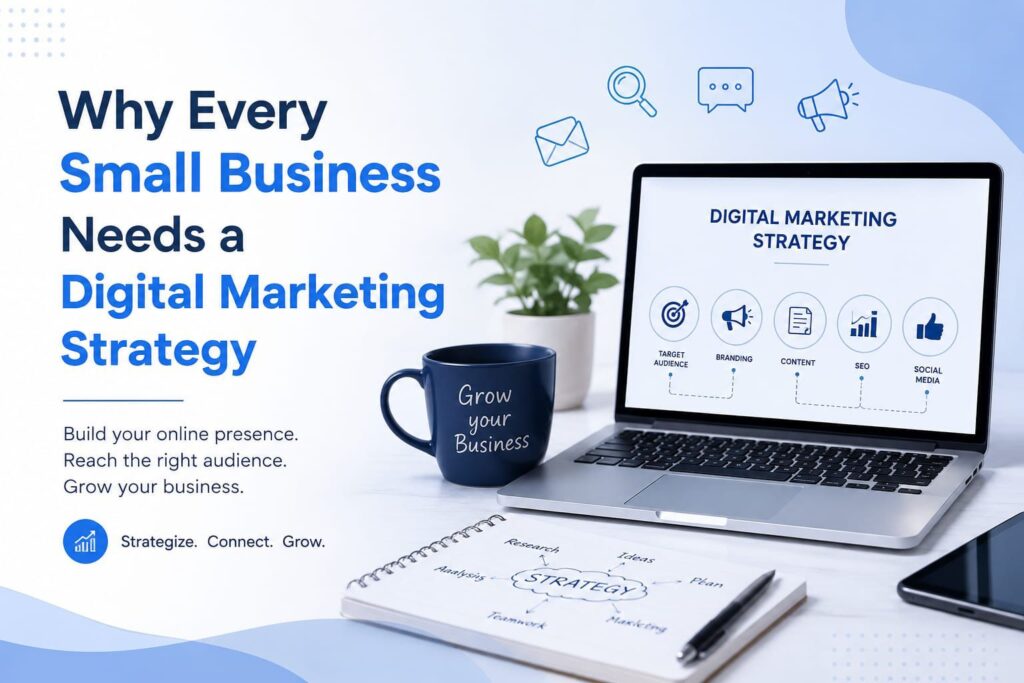
In today’s digital-first world, having a great product or service isn’t enough. Customers are searching, comparing, and making purchasing decisions online every day. Without a clear digital marketing strategy, even the best businesses can struggle to reach the right audience. Whether you run a local shop, a startup, or a growing company, a well-planned digital marketing strategy helps you attract customers, build trust, and create sustainable growth. What Is a Digital Marketing Strategy? A digital marketing strategy is a roadmap that outlines how your business will achieve its goals using online channels. Instead of posting randomly on social media or running ads without a plan, a strategy ensures every marketing effort supports your business objectives. It can include: When these elements work together, they create a stronger and more consistent online presence. Why Small Businesses Need One Your potential customers are already online. They search on Google, browse social media, read reviews, and compare businesses before making a purchase. A digital marketing strategy helps you appear where your audience is looking. People are more likely to choose businesses with a professional website, valuable content, active social media profiles, and positive online reviews. Consistency builds confidence and encourages customers to choose your brand. Digital marketing gives small businesses an opportunity to compete without needing massive budgets. Smart SEO, engaging content, and targeted campaigns can help you stand out, even against larger competitors. Instead of reaching everyone, digital marketing allows you to target the people most likely to become customers. This improves lead quality and increases the chances of conversions. One of the biggest advantages of digital marketing is data. You can track website traffic, engagement, conversions, and customer behavior to understand what’s working and where improvements are needed. Common Mistakes Small Businesses Make Many businesses miss growth opportunities because they: Avoiding these mistakes can significantly improve your marketing results. Building an Effective Digital Marketing Strategy A successful strategy starts with understanding your audience and setting clear goals. Ask yourself: Once you have these answers, create consistent, valuable content, optimize your website for search engines, engage with your audience on social media, and regularly review your performance. The Role of AI in Modern Digital Marketing Artificial intelligence is changing how businesses market online. From content creation and customer insights to automation and data analysis, AI helps businesses work more efficiently and make smarter marketing decisions. However, AI is most effective when combined with human creativity, strategic thinking, and a deep understanding of customer needs. Final Thoughts Digital marketing is no longer optional for small businesses—it’s essential. A clear strategy helps you attract the right audience, build meaningful relationships, increase brand visibility, and drive long-term business growth. The businesses that succeed aren’t always the biggest. They’re the ones that understand their customers, adapt to change, and consistently provide value online. If you’re ready to grow your business, start with a strategy—not just tactics. Every successful digital journey begins with a clear plan.

Digital Marketing Trends

What is a Digital Marketer in 2026? The Ultimate Guide to Digital Growth

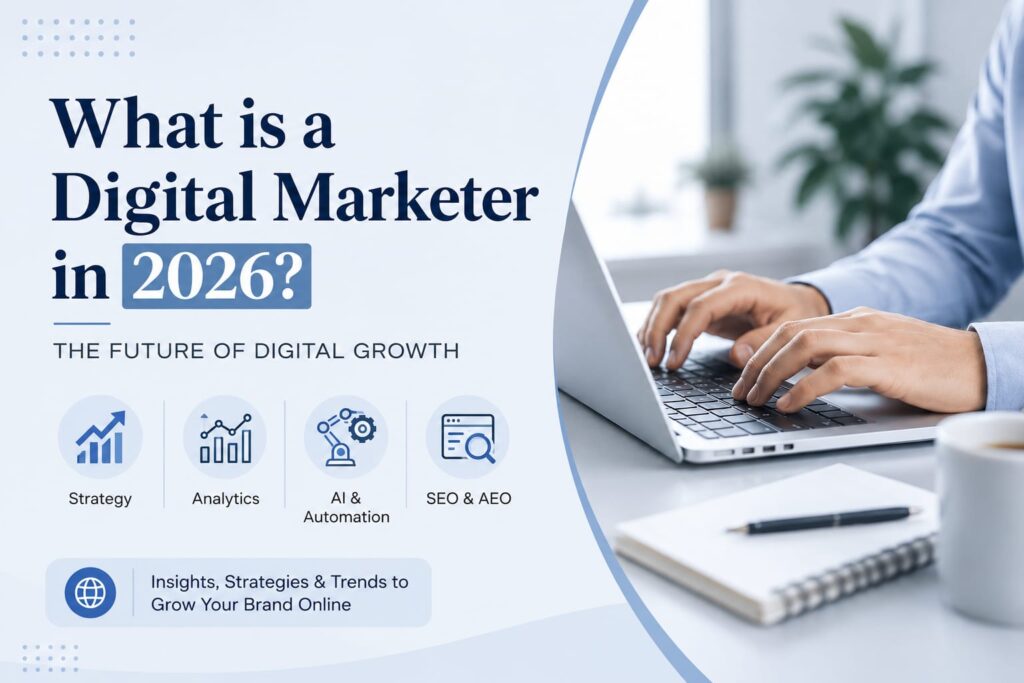
What is a digital marketer in 2026, and how is the role evolving? The digital world is changing faster than ever with the rise of artificial intelligence, automation, and data-driven strategies, the role of a digital marketer has transformed completely. In 2026, a digital marketer is no longer just someone who runs ads or manages social media. They are a digital growth expert who combines creativity, technology, data, and strategy to help businesses grow in an increasingly competitive online world. The Evolution of Digital Marketing Digital marketing has moved beyond traditional online promotion. Today, businesses need more than visibility—they need strategies that create meaningful connections and measurable growth.Modern digital marketers focus on understanding customer behavior, building strong digital experiences, and creating systems that attract, engage, and convert audiences. What Does a Digital Marketer Do in 2026? A digital marketer in 2026 works across multiple areas of digital growth: 🤖 AI-Powered Marketing Artificial intelligence has become an essential part of marketing. Digital marketers use AI tools to generate insights, automate repetitive tasks, improve campaigns, and create more personalized experiences. 📊 Data-Driven Decision Making Successful marketing is based on data. Digital marketers analyze customer behavior, campaign performance, and market trends to make smarter decisions and improve results. ✍️ Content Creation & Brand Storytelling Content continues to play a powerful role in building trust. Digital marketers create valuable content that connects with audiences and strengthens brand identity. 🔍 SEO & AEO Optimization Search behavior is changing. Digital marketers now focus on SEO and Answer Engine Optimization (AEO) to improve visibility across search engines and AI-powered platforms. 🎯 Customer Journey Optimization A digital marketer focuses on the complete customer journey—from discovering a brand to becoming a loyal customer. The goal is to create smooth and meaningful experiences. From Marketing Tasks to Growth Systems The biggest shift in 2026 is that digital marketing is no longer about individual tasks. It is about building complete growth systems. A modern digital marketer helps businesses: The Skills of a Digital Marketer in 2026 A successful digital marketer needs a combination of creative and technical skills: The ability to adapt, learn, and use new technologies has become one of the most important skills in the industry. The Future of Digital Marketing As technology continues to evolve, digital marketing will become more intelligent, personalized, and automated.However, technology alone cannot build successful brands. Creativity, strategy, and human connection will always remain at the heart of effective marketing. Conclusion A digital marketer in 2026 is more than a promoter—they are a growth architect. By combining AI, data, creativity, and strategy, digital marketers help businesses navigate the digital landscape and build meaningful connections with their customers. The future of digital growth belongs to those who can understand technology while creating experiences that people truly value.

Digital Marketing

Why I’m Building the Future of Digital Growth

Welcome to my corner of the internet! For years, I’ve worked behind the scenes—analyzing data, developing marketing strategies, building brands, and helping businesses grow in an increasingly digital world. Today, I’m stepping forward to share what drives me and why I believe the future of digital growth is more exciting than ever. My Philosophy: Intentional Digital Growth We live in a world overflowing with content, advertisements, and endless streams of information. In such a crowded space, success isn’t about being the loudest voice in the room. It’s about being clear, authentic, and intentional. Whether I’m crafting a brand identity, optimizing marketing campaigns, analyzing performance metrics, or designing digital experiences, one principle guides every decision:Everything should serve a purpose.True digital growth isn’t measured solely by clicks, impressions, or traffic. It comes from building meaningful connections that transform visitors into customers, customers into advocates, and brands into communities. As the saying goes: “Good design is obvious. Great design is transparent. But impactful digital strategy is transformative.” What You Can Expect Here This space will serve as both a digital notebook and a creative laboratory where I share ideas, insights, and real-world experiences. 📊 Case Studies & Growth Strategies Behind-the-scenes breakdowns of marketing campaigns, SEO strategies, branding projects, and practical methods for scaling digital visibility. 🛠️ Tech & Tools Honest reviews, tutorials, and insights into the platforms, technologies, and tools shaping the future of digital marketing. 🎨 Creative Inspiration Visual design concepts, photography ideas, content creation workflows, and creative processes that inspire innovation and fresh thinking. 🤝 Let’s Build Something Meaningful I’m currently open to collaborations, freelance projects, consulting opportunities, and professional networking. If you’re looking to strengthen your digital presence, improve your marketing strategy, grow your brand online, or simply discuss the latest trends in technology, marketing, and design, I’d love to connect. 👉 Visit rahnaofficial.com to get in touch. 👉 Connect with me on LinkedIn for regular insights, ideas, and conversations about digital growth. The future belongs to brands that communicate with purpose, create with intention, and adapt with confidence. Let’s build that future together.

Scroll to Top